Brett Mason is a masters runner with some very impressive credentials. In addition to his running talents, he is an artist/painter, http://www.brettmasonpaintings.com His works, which included a commissioned piece that was used in the 2019 film “A Beautiful Day In The Neighborhood” staring Tom Hanks.
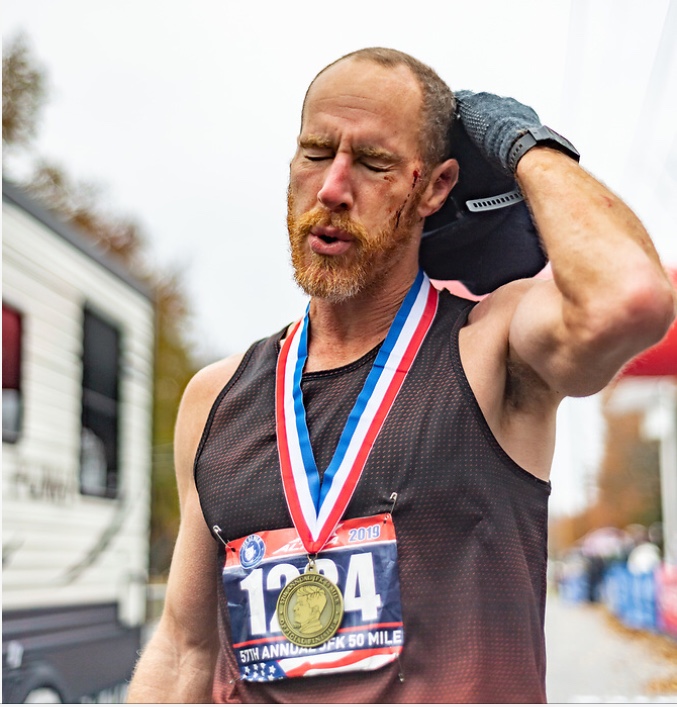
His master’s running PRs are:
Mile 4:47 (43)
5k 16:28 (43)
10k 34:10 (42)
Marathon 2:42:19 (43)
50 mile 6:18, JFK (43)
1st masters 10th overall
2020 Solo/“Pandemic 100k”, (Pittsburgh marathon course forward then reverse and 10miles) 9:05
Monday morning at 8:20, I texted Brett (ultra runner, artist, musician and coffee connoisseur) to wish him a happy 45th birthday and to ask him if he would want to write an entry for my website. Four hours and nine minutes later at 12:29, I received the following with the preface: written this morning after coffee of course (4 cups).
Felt it was fitting with the site as a starter. Obviously there’s a million things to blog about, this just happened to be relevant with the site.
Cliches are often cliches because, well, they’re often true. Nothing has more cliches in the running realm than the “masters” runner. The guy or gal wobbling to the start line with the battle scars…the aches, the pains, the declining times, the days off..although that is sometimes the case, that’s not ALWAYS the case.Let’s first clarify that although I’m writing this as a masters runner, with bits on masters running, most of these ideas can be applied to any runner of any age. Relative to the name of this site, “N of 1”, we are indeed, as runners, our own experiment. The better and more devoted scientist we are, the better runner we’ll likely become. What works for others may not work for ourselves. We are in charge of constantly monitoring our own bodies and minds individually. We need to ask ourselves questions, “What works for me?” We are the control, the variables, the data. I started a little later with my own experiment. I never got into what I consider “serious training”, as in marathon training, till I was 30, essentially ramping things up the older I got. I never ran more than 40 miles a week for most of my first ten marathons. I never hit 80 miles till I was 43. My first marathon was run at age thirty. It was Philadelphia and I qualified for Boston with a 3:10:28. It was the classic scenario…I never drank, bit off more than I could chew early on, and basically crossed the line in a death march, disoriented Haze. But I never walked.
Lesson #1 mental strength. If you’re a runner, you need it, it’s your number one priority.In the delicate words of our dear friend David Goggins “if you can’t do it yourself, you better create a mother fucker inside you that can”. After Philadelphia, I went straight to Boston the next spring and ran a 2:56, a big PR. I was stoked with my first sub three. I went on to PR my next three marathons as well, eventually hitting 2:42 at age 43. I’m 45 today(literally) and still have the elusive sub 2:40 in mind. A time I think may have had in the bag leading up to my second fifty miler. I’ve been there in terms of “shape”, but blew a few races with poor execution. It happens.So what’s my point, aside from spewing off a few boring numbers of a mediocre resume within the competitive world?A few things. Number one: Quality. I didn’t focus on big mileage but instead on the key runs: a weekly tempo, a long run, and plenty of off days or short, 4 milers. I was always rested.
And now the bigger point, being our own scientist. I’m pretty obsessive by nature. I’m either completely distracted and “attention deficient” or, in the case of running and other personal interests, a complete nerd of science and possibilities. ‘What’s my potential’? I love looking for it and I love the idea of pushing the limits in finding it. We as humans generally tend to lowball our own possibilities. Throw that crap out the window. We can’t advance without setting the bar higher.I like to analyze running. Do some research, lay the numbers out. ‘What did I do before that race or workout, why did I run faster, why did I feel stronger’? I like to pick apart my training and find the correlations. What I really like to do is find holes, gaps, and opportunities.I’ve always known before making a breakthrough, what was possible. I knew it existed before I accomplished it. I could feel it “in” me. First and foremost that comes with a positive mindset, secondly, it comes with constantly tweaking things to try and get better results. It is fair to say that I’ve run higher mileage as a masters runner. I’m also always monitoring what works and tweaking the things that I feel need improvement. For this, over the age of 42, I have PR’d at nearly every distance from the mile to fifty mile. Again, the point is not for me to give you my entire Athlinks profile, which is not that impressive. It’s about the idea of finding your own process.
Constantly monitoring.
If you’re happy with just running for peace of mind and none of this matters in terms of your intentions, I dig it. I love just running for the sake of running. I think that’s the core idea for all of us runners, and it should be. In terms of competing however, we gotta do the homework. I don’t know how many hours I’ve spent looking at my runs and picking apart the data, laying in bed at night thinking about the course of the JFK fifty miler. ‘How will I run that part? What would be the best training for that course’? A great or “perfect” race is usually the culmination of several ingredients, thrown into a giant pot and nurtured with care. This idea of nerding out also plays into the dreaded “I” word, injury. I’ve been very fortunate in that regard as well. The body whispers before it screams. If you’re not listening to your body as it whispers, that’s not being a good scientist. Back off when it hurts (not meaning effort based pain, that’s supposed to hurt) take a hike, be honest with yourself. I know it’s not easy, I’m no different than many when it comes taking that extra day off, but it’s part of being a disciplined runner. A disciplined three days off is always better than the three weeks that is the result of poor decisions.Does this mean more stretching, more “hip mobility”, more rolling? Well, again, what works for you? I’ve never been a big stretcher and used to loathe waiting for a friend who spent twenty minutes in the grass, doing yoga before a run. I had niggles leading up to my last fifty miler. I was doing hip mobility every twenty minutes, stretching, rolling, blah blah blah. Looking back, I feel like I did too much in terms of those extras. Sometimes the legs and body just need to do their own healing and repair. I ran the fifty miler, because my body was only slightly whispering, and often as is the case, the problems subsided after the race and few days/weeks of recovery. That phenomenon is a whole new discussion.Then there’s nutrition, and more self reflection..’does that food work for me’ ‘should I eat that’?My nutrition plan is tailored for me. I continue to make improvements on my diet but I’m not a saint when the cravings kick in. For longer races, I take in sports drink like a slow and steady IV and eat a few gels. That’s it. I found what works and I stick with it. I’m not the guy at an aid station table eating bacon sandwiches and twizzlers, but for some, that’s what works. It’s all monitoring. We all have our own chart, our own stressors, our own strengths, our own data. When I look at my trophies for my masters win and tenth place finish at The JFK fifty miler, it’s a reminder of an experiment gone right. For several months I wore my lab coat. I did the work, the rest, the analyzation of data, I walked to the start believing I could actually win the race. The desire to accomplish my goal of a podium finish, despite falling and smashing my head on some rocks early in the race, drove me. Is it my full potential? Possibly. I’m not getting any younger. I’m also not afraid to ask myself questions either. ‘Where’s the gaps, what’s missing? How’d that feel’? Do I even want to do this race or “just run”’? So no matter who you are, the hotshot 14 year old who’s “the next big thing” or the 100 year old guy or gal running their hundredth marathon, be your own scientist. Ask yourself questions, monitor your performance, find your own variables, nurture that pot, and most importantly, “create that motherfucker that can”.
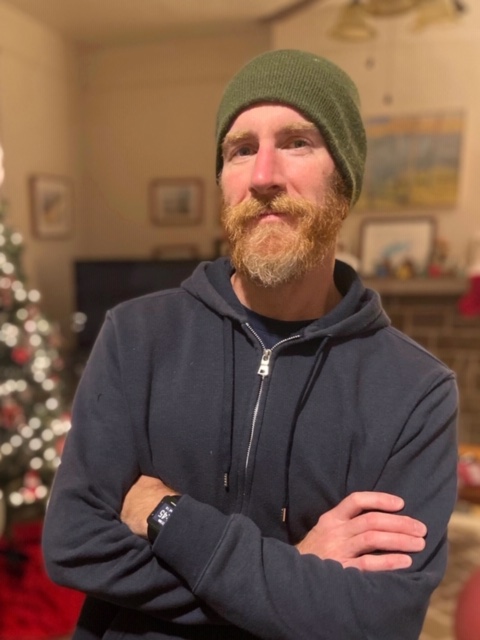
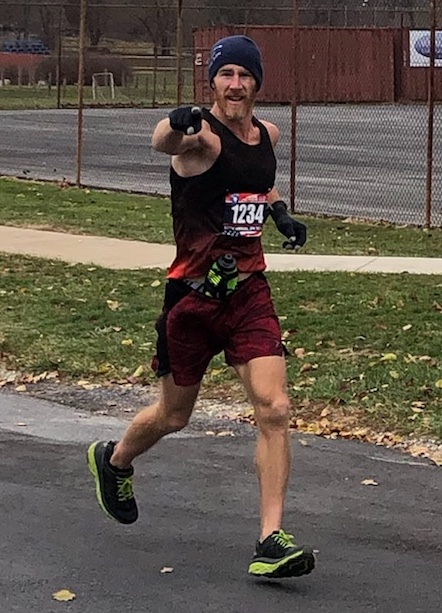
Brett, the athlete
 N of 1 Running
I needed this article this morning. First I was not real motivated to do a longish 90 min run today and I spent some time yesterday thinking about a goal time for my next race. Thank you.
LikeLike